
Table of Contents
Renovation in Batumi: Sea Climate and Seasonality
Renovation in Batumi uses the same methods as Tbilisi, but three factors change the approach substantially: sea humidity, seasonality, and the short-let market. For anyone who owns or is buying property on the coast, accounting for these has a direct effect on both cost and durability.
What makes Batumi different
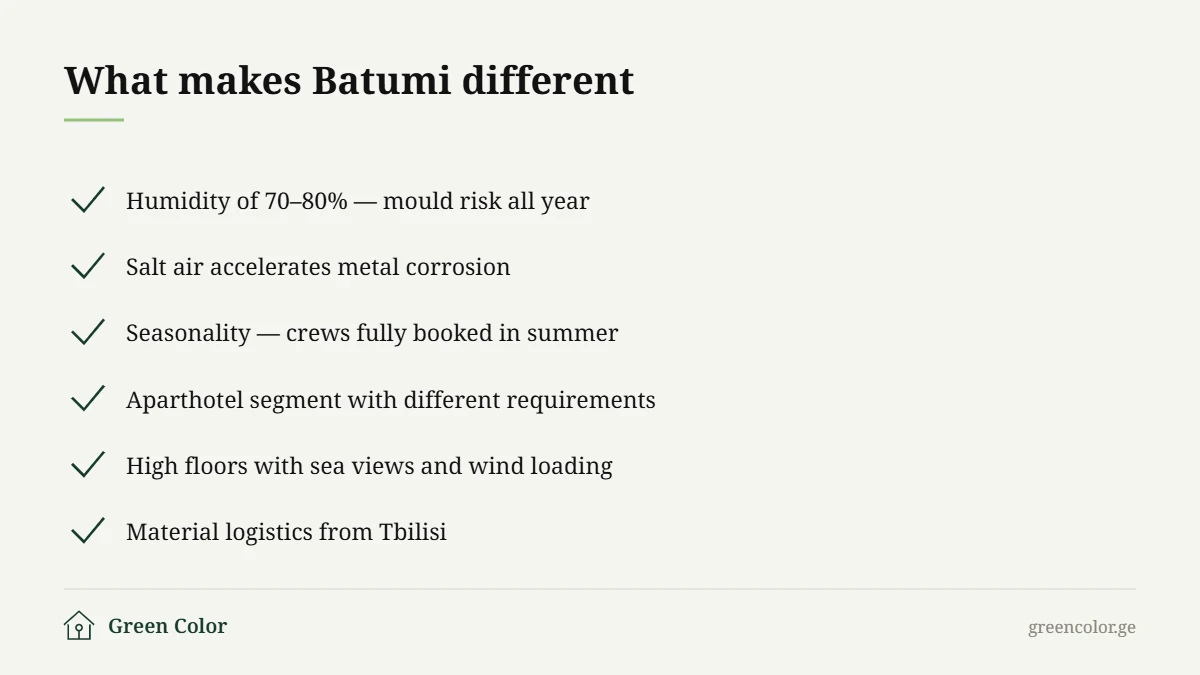
Humidity matters most. In Batumi it sits at 70–80% for much of the year, which means the risk of mould is constant rather than seasonal. Ventilation here is not a comfort feature — it is a technical requirement.
Choosing materials
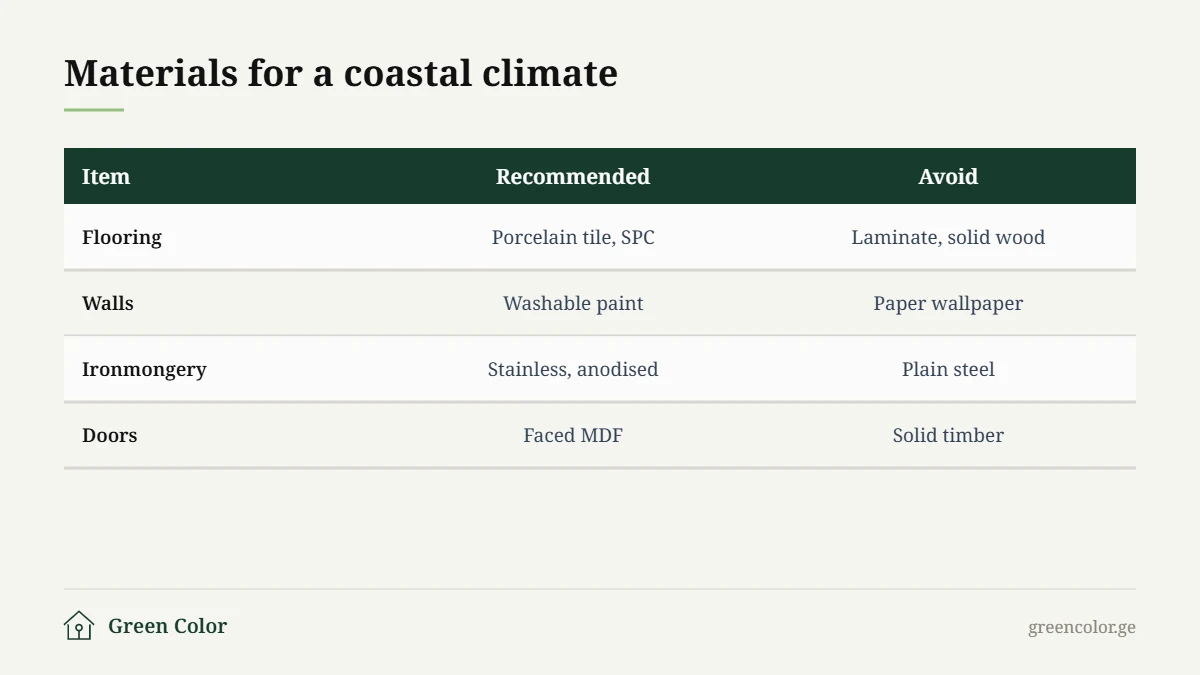
Salt air accelerates corrosion considerably. Plain steel ironmongery, fixings and curtain tracks deteriorate far faster on the coast than inland. Stainless or anodised aluminium should be specified from the outset, because replacing them later means paying twice.
For floors, laminate and solid wood perform poorly: constant humidity swings move the timber and open gaps. Porcelain tile and SPC vinyl are the objectively correct choices here.
Seasonality
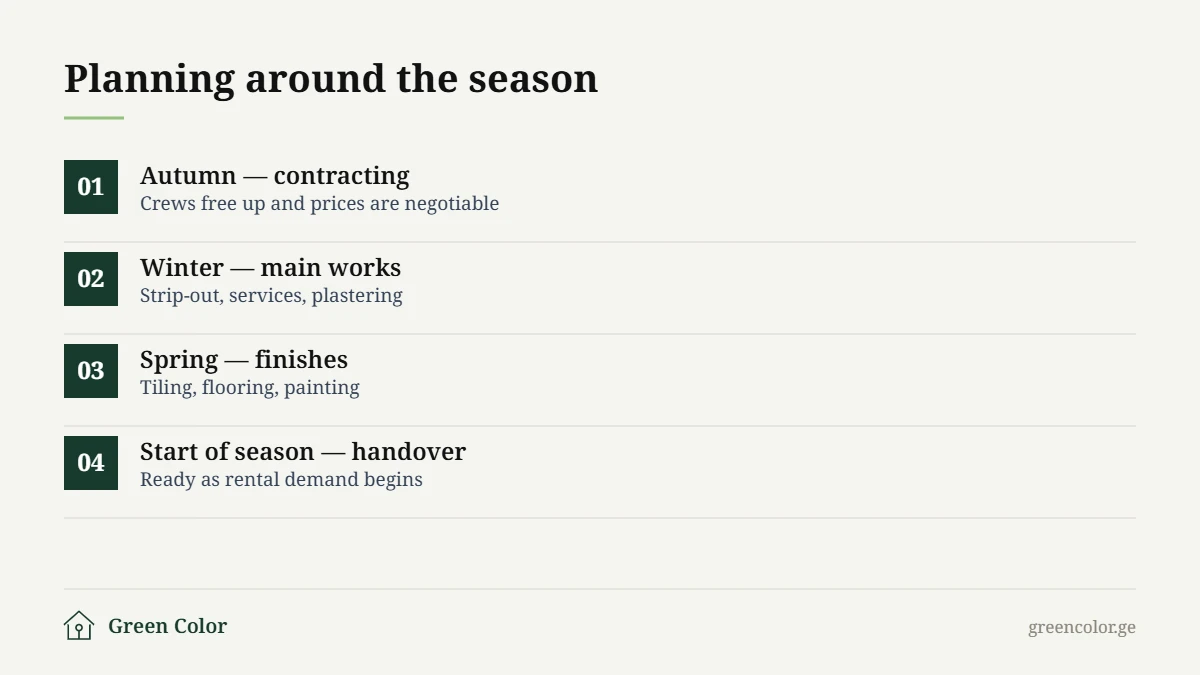
In summer Batumi crews are fully booked, prices rise and programmes slip. On top of that, many aparthotel and resort buildings prohibit noisy work altogether during the season.
The optimal programme: contract in autumn, main works through winter, finishes in spring, handover at the start of the season — so the property is ready exactly when rental demand begins.
Aparthotels and short lets
A large part of the Batumi market is oriented towards short-term letting, which changes the brief. The property sells through photographs, so design genuinely affects income — but turnover is high and durability is critical.
The practical conclusion: spend where things are both seen and worn at once — bathroom, kitchen, flooring and lighting. Everywhere else, simplicity wins. The full logic is set out in our guide to renovating a rental property.
The physics of a coastal climate
Renovation in Batumi differs because Batumi sits in a subtropical zone: annual rainfall is among the highest in Georgia and humidity exceeds 70% for most of the year.
Together those two factors create an environment where any organic material — timber, paper wallpaper, filler containing cellulose fibre — degrades quickly. Salt air adds metal corrosion on top: within the coastal strip the process runs several times faster than inland.
The practical conclusion is that material selection in Batumi is a question of durability rather than taste. Of two materials at the same price, one may last five years on the coast and the other fifteen.
High-rise buildings and wind loading
Much of the new stock in Batumi is high-rise. Above the fifteenth floor wind loading rises sharply, which affects two things in particular: balcony glazing and window hardware.
At that height balcony glazing must be a certified system — this is a safety matter, not a comfort one. Window hardware wears faster under sustained wind, so seasonal adjustment becomes necessary rather than optional.
Three technical decisions for the coast
- Permanent, timer-controlled ventilation in every wet zone
- Corrosion-resistant hardware and fixings — stainless or anodised
- Moisture-resistant finishes in bathrooms and kitchens, with no organic content
All three belong in the estimate from the start. When renovation in Batumi is carried out to Tbilisi logic, the first consequences usually appear in the second winter.
Frequently asked questions
Is renovation in Batumi more expensive than Tbilisi?
Labour is slightly cheaper, but material logistics and seasonal price rises largely cancel the difference. Work programmed for winter often does come out cheaper.
What is the most common problem in Batumi apartments?
Mould on north-facing walls and behind wardrobes. The cause is almost always a lack of ventilation rather than a leak. The fix is a timer-controlled extractor and keeping furniture 3–5 cm off the wall.
Do you work in Batumi?
Yes. Get in touch and we will survey the property and prepare an estimate.
For costs use the renovation calculator, and on timing see renovation in winter.